Continuous medical education for Tajikistan's health workforce
One portal for courses, exams, certificates, and competency reporting across regions and institutions.
Materials for low-bandwidth access
Reminders for tests and certificates
Certificates in profile with QR verification

National snapshot
MedEdu Tajikistan
82%
Average score
9,440
Registered workers
4,820
Certificates issued
82%
Average score
Portal capabilities
One digital workspace for learning, assessment, certification, and management reporting.
Online learning
Modules, videos, PDF materials, presentations, and clinical case studies.
Testing
Question attempts, automatic grading, passing scores, and result history.
Certificates
Unique numbers, QR verification, public validation pages, and PDF output.
Reporting
Institutional, regional, and national dashboards with exportable data.
National learning network
The portal connects medical workers, trainers, institutions, and coordinators into one competency development system.
6
Regions
13
Published courses
3
Mobile access
24/7
Certificate verification
Official resources for practice
The portal enriches course work with verified Ministry of Health and Social Protection links: legal documents, statistics, institution directories, and public communication channels.
Open sourceHealth Code
Legal context for learning modules, protocols, and management decisions.
Official statistics
Reference data for reports, course planning, and regional coverage monitoring.
Institution registry
A useful directory for medical organizations, profiles, reporting, and coordination.
Appeal to the minister
The official pathway for public requests and feedback.
State medical guarantees
Materials for understanding access to care and social protection guarantees.
Healthy lifestyle center
Prevention materials for public health and patient education courses.
Themes aligned with the health agenda
The learning library can keep evolving around themes highlighted by the ministry: prevention, maternal and child health, workforce development, and system readiness.
Immunization and prevention
Maternal and child health
HIV, tuberculosis, malaria, and seasonal infections
Medical education and workforce capacity
Climate change and health
Official data and digital health
Priority courses
Maternal, child health, clinical protocols, and management training.
Emergency Obstetric Care
Practical protocols for triage, hemorrhage response, referral decisions, and maternal safety documentation.
Essential Newborn Care
Newborn stabilization, feeding support, infection prevention, and family counseling in low-resource settings.
Healthcare Quality Management
Facility-level improvement cycles, indicators, audit logs, and team-based quality governance.
Mobile access
Training access from phone, tablet, and desktop
The MVP is already responsive for mobile browsers. Native iOS and Android apps are planned for the next phase so medical workers can receive alerts, continue lessons, and keep certificates on their phones.
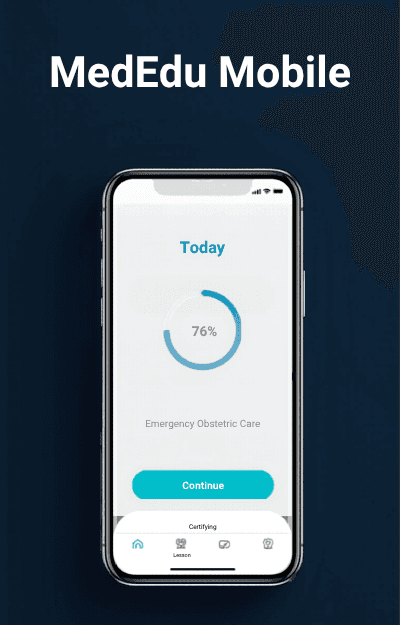
Mobile web
Available now in Safari, Chrome, and other modern browsers.
iOS app
Planned for the App Store with lessons, tests, certificates, and push notifications.
Android app
Planned for Google Play with regional and low-bandwidth optimization.
Practical content library
Courses can combine clinical protocols, presentations, checklists, video lessons, case studies, and final assessments.
Checklists and protocols
Video lessons
Competency map
Emergency Obstetric Care
Maternal health
Essential Newborn Care
Neonatology
Healthcare Quality Management
Healthcare management
Regional coverage
Certificate verification
CERT-2026-000001
VALIDMadina Saidova · Healthcare Quality Management
CERT-2026-000002
VALIDAziz Safarov · Essential Newborn Care
Learner journey
From registration to a verified certificate, each step is kept in the medical worker profile.
Register and complete profile
Choose a course and finish lessons
Pass the final assessment
Receive a QR-verified certificate
For institutions and coordinators
Administrators can monitor staff progress, certificate status, average scores, competency gaps, and regional training coverage.